




The short answer: Calgary and Ottawa lead the best places to live in Canada right now, because both pair deep job markets with housing costs a working household can carry. Halifax, Québec City and Victoria complete our top five, and the full ranked list of 12 follows, rent and home prices side by side.
That pairing is what makes this guide different. Most guides tell you what the best places to live in Canada feel like; this one shows what they cost. Every place carries a dated rent and a dated home price from a named source, the method is explained in the open, and US readers get guidance inside the ranking itself, the same approach we take across our Lifestyle guides.
One honest warning. There is no single best city in Canada, only the best fit for your job, budget and tolerance for winter. If you already know your situation, skip ahead to the section that sorts the 12 best places to live in Canada by situation.
Best Places to Live in Canada at a Glance
Here are the best places to live in Canada on one table, all figures in Canadian dollars. Rents are average asking rents for October 2026 (Rentals.ca and Urbanation), meaning what landlords advertise now across all property types. Home prices are MLS Home Price Index composite benchmark prices for September 2026 (CREA and local boards): the price of a typical home, built for comparison across cities. Safety is Statistics Canada’s Crime Severity Index for 2025 (national figure 75.0; lower is better). Income is median total household income from the 2021 Census, income year 2020. Unemployment is Statistics Canada’s Labour Force Survey rate for October 2026 (Table 14-10-0459-01), a three-month moving average, seasonally adjusted.
| Rank and place | Average 1-bedroom rent (CAD/month) | Average 2-bedroom rent (CAD/month) | Benchmark home price (CAD) | Crime Severity Index 2025 | Median household income (CAD, 2020) | Unemployment rate (%, October 2026) | Best for |
|---|---|---|---|---|---|---|---|
| 1. Calgary, Alberta | $1,503 | $1,809 | $569,200 | 61.7 | $100,000 | 6.6 | Jobs and take-home pay |
| 2. Ottawa, Ontario | $1,961 | $2,462 | $623,500 | 50.6 † | $98,000 | 7.1 | All-round balance |
| 3. Halifax, Nova Scotia | $2,057 | $2,608 | $541,700 | 68.6 | $81,000 | 5.4 | Community and coastal living |
| 4. Québec City, Québec | $1,282 | $1,645 | $445,800 | 55.0 | $76,500 | 4.5 | Low costs and historic character |
| 5. Victoria, British Columbia | $1,984 | $2,642 | $877,000 | 74.6 | $85,000 | 4.8 | Mild weather and retirement |
| 6. Edmonton, Alberta | $1,274 | $1,621 | $416,700 | 95.6 | $96,000 | 7.1 | Low rent in a big city |
| 7. Montreal, Québec | $1,722 | $2,251 | $578,200 | 61.3 | $76,000 | 6.9 | Big-city life at a lower cost |
| 8. Winnipeg, Manitoba | $1,416 | $1,755 | $392,100 | 113.4 | $83,000 | 5.0 | Affordable homes and newcomer communities |
| 9. Toronto, Ontario | $2,229 | $2,965 | $917,600 | 55.0 | $97,000 | 7.1 | Career opportunity |
| 10. Vancouver, British Columbia | $2,377 | $3,270 | $1,075,900 | 83.5 | $90,000 | 6.7 | Scenery and mild winters |
| 11. Guelph, Ontario | $1,916 | $2,290 | $720,200 | 57.8 | $97,000 | 6.1 | Smaller city, strong data |
| 12. Moncton, New Brunswick | $1,164 * | $1,453 * | $377,400 | 105.6 | $74,500 | 7.2 | Rock-bottom housing costs |
* Moncton’s rent figures come from a different series: CMHC’s Rental Market Survey for October 2025, the average rent actually paid for purpose-built apartments. Moncton does not appear in the Rentals.ca report, and rent paid usually runs below asking rents, so read this row as a floor, not a quote.
† Statistics Canada splits Ottawa-Gatineau: the Ontario part (Ottawa) scores 50.6, the Quebec part (Gatineau) 60.6.
- Calgary: strongest mix of jobs, pay, housing cost.
- Ottawa: balanced capital; safest index score.
- Halifax: friendly port; big-city rents now.
- Québec City: history and safety, small-city prices, in French.
- Victoria: mildest winters; near-Vancouver prices.
- Edmonton: lowest big-city one-bedroom rent here.
- Montreal: world-scale city, about three-quarters of Toronto’s rent.
- Winnipeg: cheapest big-city homes; weakest safety.
- Toronto: biggest career market, priced like it.
- Vancouver: finest setting; highest housing costs.
- Guelph: smaller city, strongest numbers.
- Moncton: lowest costs; smallest job market.
How We Ranked the Best Places to Live in Canada
This is an editorial ranking, not a data index, and it works in the open. Our ranking of the best places to live in Canada starts from the places the strongest published rankings keep choosing, then applies our criteria in this order of weight: housing cost first, rent and home price together; jobs and income second; safety third; livability fourth (healthcare, climate, getting around); and mover fit fifth (newcomer support, language, practicality for US readers).
Every figure comes from a named source and carries its date: rents from the Rentals.ca and Urbanation National Rent Report (October 2026), with CMHC filling the one flagged gap; home prices from CREA’s MLS Home Price Index (September 2026); the Crime Severity Index (2025), incomes (2021 Census) and unemployment (Labour Force Survey, Table 14-10-0459-01, October 2026, three-month moving average, seasonally adjusted) from Statistics Canada; and weather figures from Environment and Climate Change Canada climate normals, 1991-2020.
Two honesty notes. First, figures age: rents and prices move monthly, so treat every number as the latest at its stated date; this page is refreshed as new CREA and CMHC releases land. Second, context matters: the jobs side of this ranking rests on the unemployment column in the table above, read against Canada’s national unemployment rate of 6.7 percent in October 2026 (Statistics Canada), and these cities differ less on whether work exists than on what kind it is.
This guide was written by Jessica Addison and reviewed by Sabeen Faheem, who checked the figures against their sources before publication. Most ranking pages name neither an author nor a reviewer; a guide that asks you to move your life should say who stands behind it.
The 12 Best Places to Live in Canada, Ranked
Here are the 12 best places to live in Canada, one by one. Each city follows the same pattern: why it ranks here, the numbers, the work, safety, weather, who it fits, and the honest catch. Every place has one; a guide that hides them is selling you something.
1. Calgary, Alberta: Best for Jobs and Take-Home Pay
Calgary tops the list because it wins the combination that matters most: strong pay and carryable housing. The median household income is $100,000, the highest in this ranking (Statistics Canada, 2021 Census, income year 2020). The benchmark home price is $569,200 (CREA MLS Home Price Index, September 2026), and average asking rent in October 2026 was $1,503 for a one-bedroom and $1,809 for a two-bedroom (Rentals.ca and Urbanation): Toronto-level incomes at roughly two-thirds of Toronto’s housing cost.
The work base starts with energy, plus tech, logistics and head offices. Alberta keeps more of each paycheque in your pocket: it is the only province with no provincial sales tax, so shoppers pay just the 5 percent federal GST. Calgary’s Crime Severity Index is 61.7 for 2025, below the national 75.0. Winters are long and cold, eased by warm chinook winds: January averages -7.6 °C, July averages 16.9 °C, and annual snowfall is 138.7 cm.
Where to look: the Beltline, dense with apartments south of downtown, suits renters who walk to work; Inglewood, the oldest neighbourhood, is slower, with 9th Avenue shops. Best fit: career builders and families. The catch: serious winters, and an economy that swings with energy prices.
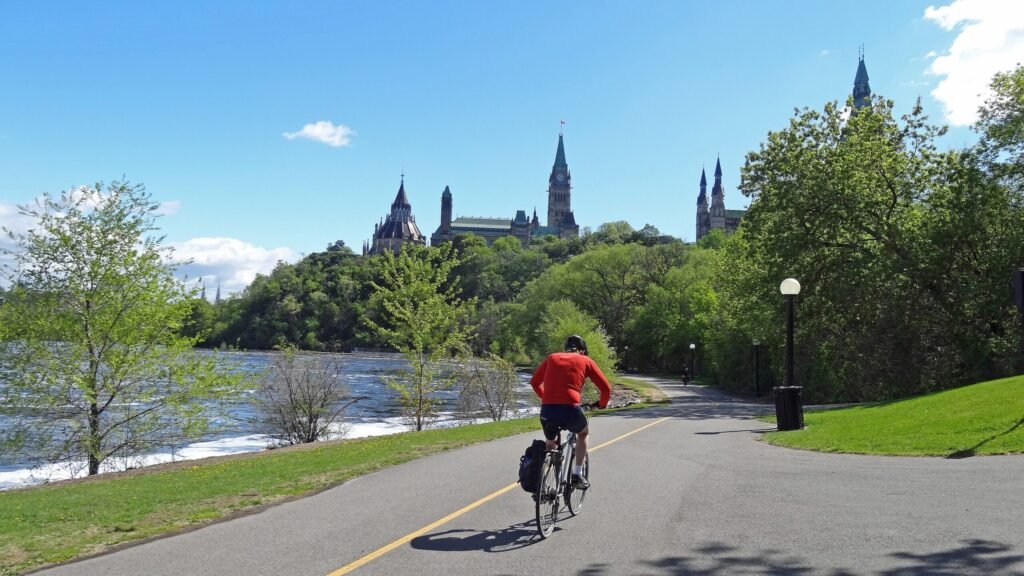
2. Ottawa, Ontario: Best All-Round Balance of Safety, Jobs and Cost
Ottawa is the ranking’s steady hand. Its Crime Severity Index for the Ontario part of the capital area is 50.6 for 2025 (Statistics Canada), the lowest score on this list and well below the national 75.0. The benchmark home price is $623,500 (September 2026), average asking rent was $1,961 for a one-bedroom and $2,462 for a two-bedroom in October 2026, and the median household income of $98,000 across the Ottawa-Gatineau area is second only to Calgary.
The federal government anchors the job market, with a real tech cluster in Kanata beside it, so downturns land softer here. Winters are cold and snowy: January averages -10.0 °C, July averages 21.2 °C, and annual snowfall is 231.9 cm. Where to look: Westboro, village-like along Richmond Road, and Kanata, suburban and close to the tech employers. Across the river, Gatineau offers lower housing costs on the Quebec side, with a Crime Severity Index of 60.6.
Best fit: families and public-sector or tech workers who value calm over buzz. The catch: many top jobs ask for English and French, and hiring leans on government cycles.

3. Halifax, Nova Scotia: Best for Community and Coastal Living
Halifax sells a way of life: a walkable port city with ocean air and short drives to serious coastline. The benchmark home price is $541,700 (September 2026), but average asking rent reached $2,057 for a one-bedroom and $2,608 for a two-bedroom in October 2026, higher than Ottawa or Victoria for a one-bedroom; the two-bedroom figure is above Ottawa’s but a little below Victoria’s, as fast population growth tightened the market. Its Crime Severity Index is 68.6 for 2025, below the national figure.
Work clusters around the port and navy, universities, healthcare and ocean tech. The median household income is $81,000, below the big metros, which is the real trade: community and coast, in exchange for a lower salary ceiling. Winters are milder than the Prairies but stormy, with nor’easters off the Atlantic: January averages -5.7 °C, July averages 19.2 °C, and annual snowfall is 215.2 cm.
Where to look: the North End mixes historic streets, including the Hydrostone district, with a younger, creative energy; Dartmouth, a ferry ride across the harbour, is cheaper. Best fit: people trading peak income for balance and belonging. The catch: lower wages, higher-side taxes, and rents that no longer match the laid-back image.

4. Québec City, Québec: Best for Low Costs and Historic Character
Québec City is the value story of this ranking. Average asking rent was $1,282 for a one-bedroom and $1,645 for a two-bedroom in October 2026, and the benchmark home price is $445,800 (September 2026): big-city numbers closer to a small town’s. Its Crime Severity Index is 55.0 for 2025, among the lowest on the list, and daily life unfolds around a walled old town. The median household income is $76,500.
Now the filter, stated plainly: Québec City runs in French. The provincial government, insurers and tech firms that anchor its job market mostly hire in French. For a French speaker, few cities offer this much city for this little money. Winters are cold and snowy, leaned into with a winter carnival: January averages -11.9 °C and July averages 19.5 °C.
Where to look: Saint-Roch is the downtown pick, with tech offices and students; Montcalm is leafier, near the Plains of Abraham. Best fit: French speakers, remote workers paid from elsewhere, history lovers. The catch: without French, the job market narrows sharply, whatever the rent says.
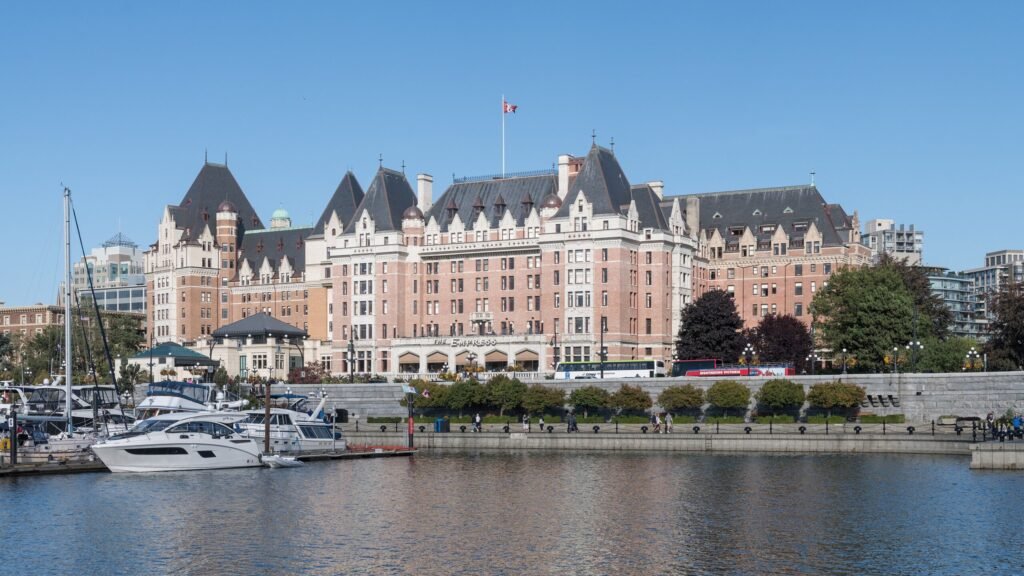
5. Victoria, British Columbia: Best for Mild Weather and Retirement
Victoria’s claim is climate: the mildest winters on this list, with snow a rare event. January averages 4.6 °C, July averages 17.2 °C, and annual snowfall is just 38.6 cm. The cost is real: the composite benchmark price is $877,000 (September 2026), and the benchmark for a single-family home in the Victoria core is $1,280,100 (Victoria Real Estate Board, September 2026). Average asking rent was $1,984 for a one-bedroom and $2,642 for a two-bedroom in October 2026.
The job base is the provincial government, tourism, healthcare and a modest tech scene; the median household income is $85,000. Victoria’s Crime Severity Index is 74.6 for 2025, almost exactly the national figure. Where to look: James Bay sits beside downtown and the harbour; Oak Bay is the quiet, village-like pick favoured by retirees.
Best fit: retirees, remote workers and anyone fleeing real winter. The catch: near-Vancouver house prices, and a ferry between you and the mainland.
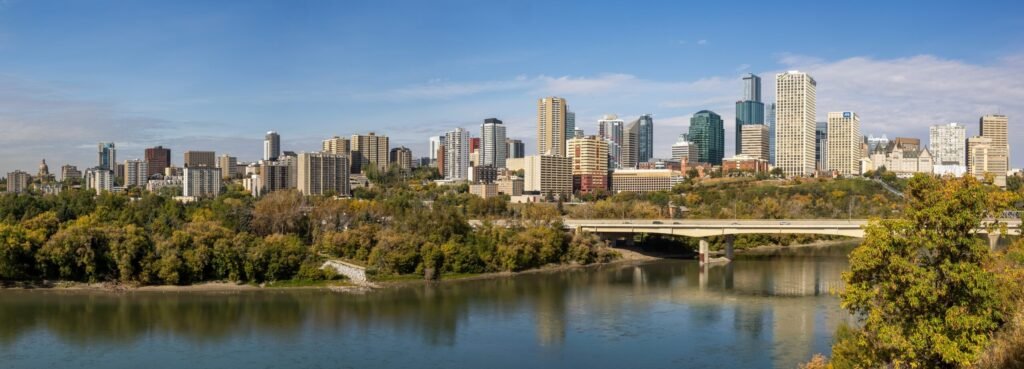
6. Edmonton, Alberta: Best for Low Rent in a Big City
Edmonton is the renter’s best friend among Canada’s big cities. Average asking rent in October 2026 was $1,274 for a one-bedroom and $1,621 for a two-bedroom (Rentals.ca and Urbanation), the lowest big-city one-bedroom figure here. The benchmark home price is $416,700 (September 2026), and the median household income is $96,000, fifth highest here. Like Calgary, it pairs that value with Alberta’s tax setting: no provincial sales tax, only the 5 percent federal GST.
Work spreads across the provincial government, energy services, healthcare, education and logistics. Read one figure straight: the Crime Severity Index is 95.6 for 2025, above the national figure, though down 7 percent on the year. Winters are among the coldest on this list, long, dark and dry: January averages -12.3 °C, July averages 16.2 °C, and annual snowfall is 126.7 cm.
Where to look: Old Strathcona, around Whyte Avenue, for the festival strip and the city’s arts scene, and downtown for condos close to work and the river valley.
Best fit: renters saving for a first home, tradespeople, and anyone who wants big-city services at the lowest monthly cost. The catch: a long, deep winter, and a spread-out, car-first layout.
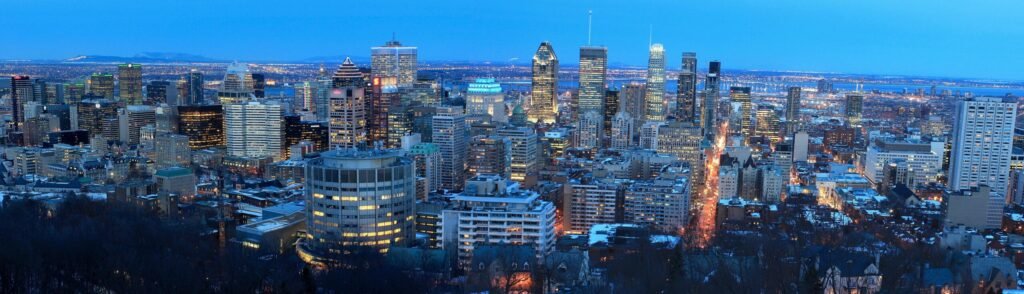
7. Montreal, Québec: Best for Big-City Life at a Lower Cost
Montreal is the big-city bargain. Average asking rent was $1,722 for a one-bedroom and $2,251 for a two-bedroom in October 2026, hundreds below Toronto and Vancouver, and the benchmark home price is $578,200 (September 2026). For that you get festivals, restaurants, a real metro and deep culture. Its Crime Severity Index is 61.3 for 2025, below the national figure, and the median household income is $76,000.
The job market is broad: aerospace, technology and artificial intelligence, video games, pharmaceuticals and the creative industries. French is the first filter for work. Many employers require it, and the honest version of the Montreal dream includes learning the language; English-speaking pockets exist, especially in tech, but they narrow your options. Winters are cold and snowy, summers the best on this list: January averages -9.2 °C, July averages 21.7 °C, and annual snowfall is 216.6 cm.
Where to look: the Plateau-Mont-Royal and Mile End for row houses, cafes and a bike-first street life, and Old Montréal for the historic core.
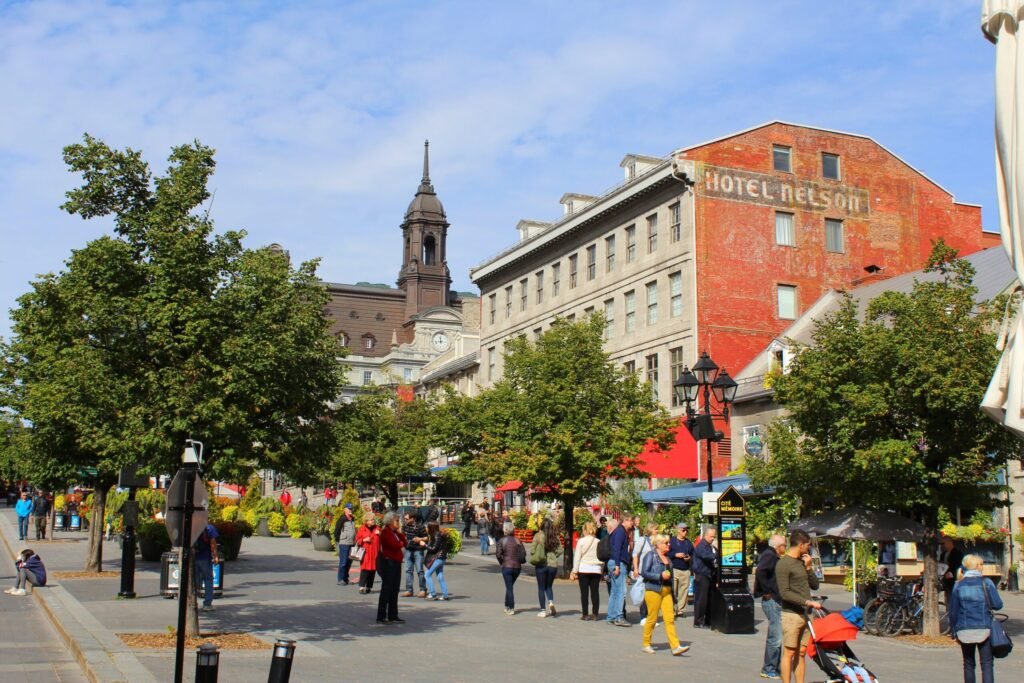
For American readers, Montreal is the closest big Canadian city to the US Northeast, roughly an hour’s drive from the Vermont border. Best fit: younger movers and creatives who want a major city without a major-city rent. The catch: Quebec income taxes are among the highest in the country, as the tax table below shows, and French limits job choice.

8. Winnipeg, Manitoba: Best for Affordable Homes and Newcomer Communities
Winnipeg holds the lowest benchmark home price of any big city in this ranking, $392,100 (September 2026), and its rents stay low: average asking rent of $1,416 for a one-bedroom and $1,755 for a two-bedroom in October 2026. The median household income is $83,000. The work base is unglamorous and steady: manufacturing, a central transport hub, agriculture, insurance and finance operations, and healthcare. Its newcomer communities are a genuine asset, including one of the largest Filipino communities in Canada.
Two catches, stated openly. Winnipeg’s Crime Severity Index is 113.4 for 2025, the highest on this list and well above the national figure of 75.0. The index weights severe crimes heavily, and daily life varies by neighbourhood, but the number is what it is; it fell 9 percent in 2025. The other catch is winter: cold that Prairie residents themselves respect. January averages -16.3 °C, the coldest January figure on this list, July averages 19.5 °C, and annual snowfall is 126.2 cm.
Where to look: Osborne Village, just south of downtown, for walkable streets, shops and nightlife, and the Exchange District for heritage buildings and loft living in the old warehouse core.
Best fit: newcomers who want community from day one, and buyers whose budget tops out where Toronto’s bidding wars begin. Winter gear here is not a metaphor.

9. Toronto, Ontario: Best for Career Opportunity, at a Price
Toronto ranks ninth, and cost is the reason it is not higher. Average asking rent was $2,229 for a one-bedroom and $2,965 for a two-bedroom in October 2026, roughly one and a half times Calgary’s figures, and the benchmark home price is $917,600 (September 2026), the second highest here. Everything else argues for first place: the largest job market in the country across finance, tech, healthcare, education and media, and the Oxford Economics Global Cities Index for 2026 places Toronto first in Canada. The median household income is $97,000, and its Crime Severity Index is 55.0 for 2025, well below the national figure.
For Americans, Toronto is the most common landing city, with the largest established community of US movers. Winters are cold but milder than the Prairies, eased by the lake: January averages -5.0 °C, July averages 22.1 °C, and annual snowfall is 114.5 cm.
Where to look: Kensington Market for a lived-in market neighbourhood of shops and Victorian houses, and Leslieville, east across the Don River, for quieter streets and family-sized homes.

Best fit: career climbers, and movers who want maximum choice in employers, schools and neighbourhoods. The catch is housing cost, full stop: budget honestly, or pick Ottawa and visit by train.

10. Vancouver, British Columbia: Best for Scenery and Mild Winters, at the Highest Cost
Vancouver holds the two extremes of this ranking. It has the setting people dream about: mountains behind the harbour, a mild green winter, and a regular place near the top of global livability rankings. It also has the highest housing costs here: average asking rent of $2,377 for a one-bedroom and $3,270 for a two-bedroom in October 2026, and a benchmark home price of $1,075,900 (September 2026). The median household income is $90,000, solid but nowhere near enough to make those prices easy.
Work centres on the port and Pacific trade, film and television production, tech and tourism. Its Crime Severity Index is 83.5 for 2025, above the national figure. Winter means rain rather than snow, weeks of it, which some movers find harder than cold: January averages 4.1 °C, July averages 18.2 °C, and annual snowfall is just 36.6 cm.
Where to look: Kitsilano for beach life, parks and the West 4th Avenue shops, and Mount Pleasant, along Main Street, for breweries, murals and a younger crowd.
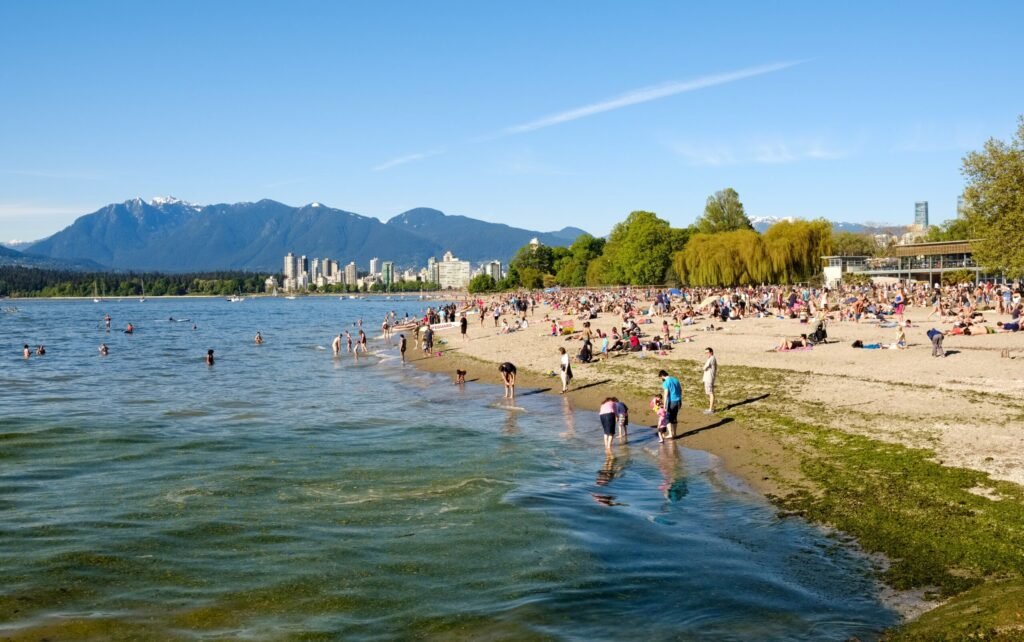
Best fit: outdoors-first movers who can carry premium housing, and remote workers paid from higher-cost markets. The catch: the most expensive housing in Canada on these measures, and a grey season that tests people yearly.

11. Guelph, Ontario: Best Smaller City, Backed by the Data
Guelph is the smaller city with a data case, not just a nice story: Zolo’s Best Places to Live ranking has put it first in the country two years running, and the figures hold up. The benchmark home price is $720,200 (September 2026), the median household income is $97,000, matching Toronto’s, and its Crime Severity Index is 57.8 for 2025. Average asking rent was $1,916 for a one-bedroom and $2,290 for a two-bedroom in October 2026.
Local work leans on manufacturing, the university’s agriculture and food research, and services, and many residents commute toward Toronto, about an hour away. The feel is a handsome limestone downtown and neighbourhoods built for families rather than nightlife.
Where to look: downtown, around Wyndham and Macdonell streets, for the limestone core and the GO station, and Exhibition Park for older homes on larger lots just northwest of the centre.
Best fit: families and commuters who want Toronto access without Toronto prices. The catch: a smaller local job market, and prices that are not small-town cheap; you pay for quality, just less than in the big city.
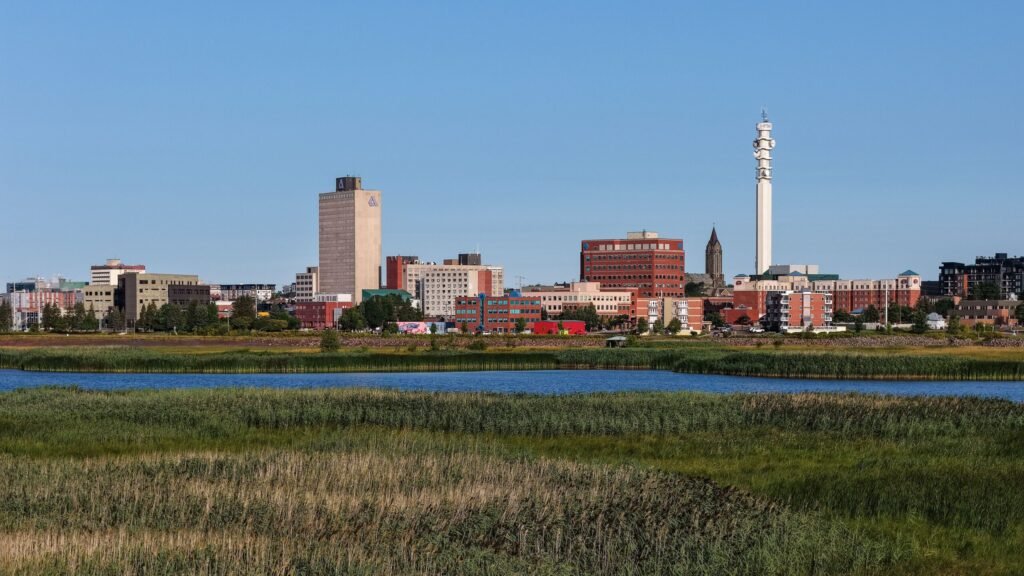
12. Moncton, New Brunswick: Best for Rock-Bottom Housing Costs in Atlantic Canada
Moncton closes the list with the lowest housing costs in the ranking. Its benchmark home price is $377,400 (September 2026), the lowest here, and CMHC’s Rental Market Survey puts average rent paid for purpose-built apartments at $1,164 for a one-bedroom and $1,453 for a two-bedroom (October 2025), with the caveat from our main table that rent paid runs below asking rent. The median household income is $74,500, the lowest here: the other side of the affordability coin.
The city works as Atlantic Canada’s transport and distribution hub, with back-office employers, healthcare and a genuinely bilingual character, and the scale means short commutes. Two honest flags: Moncton’s Crime Severity Index is 105.6 for 2025, above the national figure and up on the year before, and winters bring real Atlantic snow: January averages -8.4 °C, July averages 19.3 °C, and annual snowfall is 309.9 cm, the most of any city here.
Best fit: budget-first movers, remote workers and downsizers who want a house, not a bidding war. The catch: the smallest job market here, fewer direct flights, and thinner specialist services.
More Places Worth a Look
The ranking of the best places to live in Canada stops at 12, but 12 is not the whole map. These five places sit outside the ranking: each missed the top 12 on the balance of housing cost, jobs, safety and mover fit, yet each is the right answer for somebody. They are priced with the same sources as the ranked cities, so the figures compare directly, and where a figure rests on a different basis, the label says so.

Saskatoon, Saskatchewan
Saskatoon is the Prairie river city: the South Saskatchewan River bends through the middle, bridges stitch the two banks together, and a university anchors the east side. It pairs a real, diversified economy with prices well below the Alberta cities, and its winters are the full Prairie version.
The figures: average asking rent of $1,297 for a one-bedroom and $1,528 for a two-bedroom (Rentals.ca and Urbanation, October 2026); a benchmark home price of $439,600 (CREA MLS Home Price Index, September 2026); a Crime Severity Index of 98.9 for 2025 (Statistics Canada), above the national figure of 75.0, which is the honest catch; and a median household income of $89,000 (2021 Census, income year 2020).

Regina, Saskatchewan
Regina is Saskatchewan’s capital, wrapped around Wascana Lake, with the legislative building on the shore and parkland running through the city. Government and the head offices around it anchor steady work, and the cost of a house is the friendliest surprise in this guide.
The figures: average asking rent of $1,286 for a one-bedroom and $1,529 for a two-bedroom (October 2026); a benchmark home price of $343,900 (September 2026), the lowest benchmark in this guide; a Crime Severity Index of 87.4 for 2025; and a median household income of $90,000 (2021 Census, income year 2020).

Hamilton, Ontario
Hamilton is the steel city remaking itself: factories and port lands below the Niagara Escarpment, a busy arts and food scene in the lower city, and commuter trains carrying many residents to Toronto jobs. You get a big-city position on the map at a mid-size price.
The figures: average asking rent of $1,653 for a one-bedroom and $2,075 for a two-bedroom (October 2026); a benchmark home price of $718,600 (September 2026), which is the Cornerstone Association of REALTORS board-area benchmark for Hamilton-Burlington-Haldimand-Niagara North, not a Hamilton-only figure; a Crime Severity Index of 54.8 for 2025, one of the lowest in this guide; and a median household income of $91,000 (2021 Census, income year 2020).

St. John’s, Newfoundland and Labrador
St. John’s is the country’s eastern edge: a working harbour under steep hills, rows of brightly painted wooden houses, and a music and pub culture out of proportion to its size. It is also the most weather-beaten city in this guide, with Atlantic fog and wind as standing features.
The figures: average asking rent of $1,211 for a one-bedroom and $1,385 for a two-bedroom (October 2026), the lowest asking rents in this section; a benchmark home price of $421,800 (September 2026); a Crime Severity Index of 79.2 for 2025; and a median household income of $85,000 (2021 Census, income year 2020).
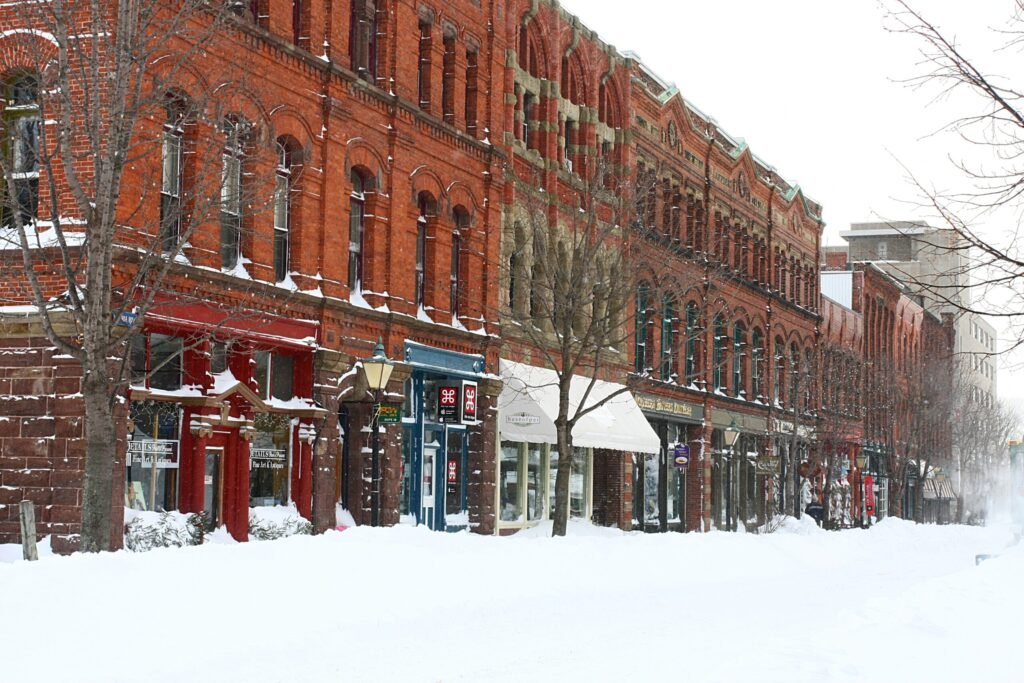
Charlottetown, Prince Edward Island
Charlottetown is Prince Edward Island’s capital and its largest place, which still leaves it a small, walkable harbour town of red brick and church spires. The 1864 conference that led to Confederation met here, and island farm and beach life starts at the city edge.
The figures, with two labels that matter: average rent actually paid of $1,066 for a one-bedroom and $1,354 for a two-bedroom (CMHC Rental Market Survey, October 2025, purpose-built apartments; Charlottetown does not appear in the Rentals.ca asking-rent report, so this row is rent paid, like Moncton’s in the main table); a benchmark home price of $377,900 (September 2026), which is the Prince Edward Island province-level MLS HPI benchmark, because no Charlottetown city HPI is published; and a median household income of $76,500 (2021 Census, income year 2020). Statistics Canada does not publish a Crime Severity Index for Charlottetown in the census metropolitan area table used throughout this guide, so none is printed here rather than a substitute.
Best Places to Live in Canada for Your Situation
The ranking above is one answer; this section sorts the best places to live in Canada by life situation, using the same figures.
Best for Families
Ottawa and Guelph lead. Ottawa pairs the lowest Crime Severity Index on the list (50.6 for the Ontario part, 2025) with a $623,500 benchmark price and government steadiness; Guelph is close behind it on safety (57.8) with a $97,000 median household income. We judged family fit on safety data, home size for the price, and schools and healthcare access. Calgary is the higher-income family pick, where the $100,000 median household income stretches furthest against a $569,200 benchmark.
Best for Newcomers and Immigrants
Calgary leads on jobs and income, Winnipeg on community and cost, with established newcomer communities including one of Canada’s biggest Filipino communities, and Ottawa on bilingual public-sector paths. One rule comes before any city choice: your immigration pathway can tie you to a province. A provincial nominee nomination means settling in that province, so sort the pathway first, the city second.
Best for Renters
Edmonton has the lowest big-city one-bedroom asking rent at $1,274, Québec City is next at $1,282, and Winnipeg follows at $1,416 (all October 2026). Montreal is the big-city renter’s pick at $1,722. Most movers rent first in year one, whatever they plan later; families should shop on the two-bedroom figure, not the one-bedroom headline.
Best for Retirees
Victoria leads on climate and pace; its catch is price. Halifax offers coastal life at a $541,700 benchmark, and Moncton is the low-cost retiree pick at $377,400. The deciding factor is usually healthcare access rather than housing: check how coverage starts in your province in the costs section below, because waiting periods differ.
Best for Young Adults and Students
Montreal and Toronto lead for opposite reasons: Montreal for roommate-friendly rents in a city built for going out, Toronto for the deepest entry-level job market and most universities and colleges. Halifax is the smaller-city option, with several universities and a young downtown, if its rents fit the budget.
Best for Americans Moving North
First, the plain fact: US citizenship alone gives you no right to live or work in Canada. A US passport is enough to visit, and most visitors can stay up to 6 months, but settling requires status. The main lawful routes, as Canada’s immigration department lists them, are work permits (including CUSMA professional permits, covering 63 listed occupations for US citizens with a pre-arranged job and no labour market test), Express Entry for skilled workers, provincial nominee programs, study permits, and family sponsorship. General information only, not legal advice.
Where do Americans actually land? Toronto is the first stop for many American movers, then Vancouver, Calgary, Montreal and Ottawa. The pull is not only American: Statistics Canada recorded that 27.7 percent of the immigrants Canada added between July 1, 2023 and July 1, 2024 settled in the Toronto area alone. Two money points deserve care. If you plan to buy, know that Canada’s ban on home purchases by non-Canadians runs until January 1, 2027: it covers homes in census metropolitan areas and census agglomerations, with exceptions including many work permit holders and homes outside those areas. And Express Entry skilled worker applicants must show settlement funds, $15,263 for a single applicant under the official table updated July 7, 2025. Every figure here is in Canadian dollars. At the Bank of Canada’s rate for November 10, 2026 (1 US dollar = 1.4181 Canadian dollars), the settlement funds figure above is about US$10,800, and the average one-bedroom asking rents in the five landing cities above work out to roughly US$1,060 a month in Calgary, US$1,215 in Montreal, US$1,385 in Ottawa, US$1,570 in Toronto and US$1,675 in Vancouver. Finally, taxes: US citizens living abroad remain subject to US tax on worldwide income and must file US tax returns, as the IRS states on its page for US citizens and resident aliens abroad, and a tax treaty between Canada and the United States exists to relieve double taxation. That is general information, not advice; talk to a cross-border tax professional before the move, not after.
Big City or Smaller Place? The Trade-Off, Priced
The sharpest choice on this list is not east against west. It is scale against scale. Here are the two biggest cities against our two smaller ranked places, plus Kelowna, using the same figures as the main table.
| Place | Average 1-bedroom rent (CAD/month, October 2026) | Benchmark home price (CAD, September 2026) | The trade-off in one line |
|---|---|---|---|
| Toronto | $2,229 | $917,600 | Every employer and amenity in the country, at the country’s prices. |
| Vancouver | $2,377 | $1,075,900 | The finest setting in Canada, and the highest bill for living in it. |
| Guelph | $1,916 | $720,200 | Toronto incomes and safety an hour away, without the Toronto address. |
| Kelowna | $1,828 | $797,500 | Lake and wine country living, priced like a resort, because it is one. |
| Moncton | $1,164 * | $377,400 | A house for condo money, in exchange for the smallest job market here. |
* Moncton’s rent: CMHC average rent paid, October 2025, as flagged above. Kelowna’s benchmark: Association of Interior REALTORS data as published in a CREA data snapshot, September 2026.

Kelowna, on Okanagan Lake, offers warm summers, wineries and ski hills (January averages -2.6 °C and July averages 20.0 °C), a median household income of $85,000, and one warning: its Crime Severity Index is 103.7 for 2025, above the national figure. At $797,500 it competes on lifestyle, not savings.
Now price the trade-off plainly. The gap between Toronto’s benchmark price and Moncton’s is $540,200. In Guelph or Moncton, a budget that buys a condo in Toronto buys a detached house. Smaller places give back space, short commutes and community pace; they give up job depth, specialist healthcare and direct flights. Neither answer is wrong; the mistake is choosing scale by accident.
Rent or Buy? What Each Path Costs in the Same Cities
Put the two housing columns together and a pattern appears. In Ottawa, the $623,500 benchmark price equals about 21 years of the average two-bedroom rent; in Moncton, the $377,400 benchmark equals about 22 years, using its CMHC rent-paid figure. In Calgary and Toronto the same math lands near 26 years. The plain reading: buying costs less relative to renting in the mid-cost cities than at the extremes, but nowhere here is it cheap in absolute terms.
One caution on every rent figure in this guide: the main table prints asking rents, meaning what landlords advertise. What sitting tenants actually pay runs lower. CMHC’s Rental Market Survey (October 2025) measures the average rent actually paid in purpose-built apartment buildings, and the table below puts all 12 ranked cities on that single footing. Note that Moncton stands on this same CMHC series as every other city here, so in this table its figure compares directly, with no footnote needed.
| Place | CMHC average 1-bedroom rent paid (CAD/month) | CMHC average 2-bedroom rent paid (CAD/month) |
|---|---|---|
| Calgary | $1,582 | $1,914 |
| Ottawa | $1,594 | $1,926 |
| Halifax | $1,540 | $1,826 |
| Québec City | $1,107 | $1,277 |
| Victoria | $1,625 | $2,120 |
| Edmonton | $1,301 | $1,603 |
| Montreal | $1,131 | $1,346 |
| Winnipeg | $1,232 | $1,571 |
| Toronto | $1,761 | $2,046 |
| Vancouver | $1,806 | $2,363 |
| Guelph | $1,627 | $1,802 |
| Moncton | $1,164 | $1,453 |
Source: CMHC Rental Market Survey, Rental Market Report data tables, October 2025, average rents for private apartment units. CMHC’s Ottawa figures cover the Ontario part of Ottawa-Gatineau only.
The year-one reality is simpler than the math. Renting first is the normal path: it lets you learn neighbourhoods on foot before committing a down payment. Buying sight unseen in a new country adds risk, and Canadian mortgage approval leans on Canadian credit history and local income documents, which take time to build. None of this is financial advice; it is the order most successful movers follow.
For Americans, one variable cuts both ways: if your income or savings sit in US dollars, exchange swings change your rent burden and buying power month to month. Run your budget in Canadian dollars, with a margin, and let any currency gain be a bonus, not the plan.
The Costs Beyond Rent: Taxes, Healthcare and Everyday Spending
Housing is the biggest line in a move, but taxes decide what a salary is worth. This table shows a $90,000 salary in the four provinces our ranked cities lean on (WOWA income tax calculator, 2026 rates, single filer, no other income). WOWA’s total includes income tax plus EI and pension contributions: everything off the top.
| Province | Gross salary (CAD) | Total tax and payroll deductions (CAD) | Take-home pay (CAD) |
|---|---|---|---|
| Alberta | $90,000 | $22,491 | $67,509 |
| Ontario | $90,000 | $22,803 | $67,197 |
| British Columbia | $90,000 | $21,631 | $68,369 |
| Quebec | $90,000 | $27,526 | $62,474 |
Source: WOWA income tax calculator, 2026 tax year, read November 11, 2026. Quebec’s higher total reflects its own pension plan and parental insurance on top of the country’s highest provincial income tax load; British Columbia is lightest at this salary. On purchases, Alberta is the only province with no provincial sales tax: residents pay just the 5 percent federal GST, while every other province here charges more at the till.
Healthcare is funded through those taxes rather than monthly premiums, but access has fine print. Waiting periods are provincial. British Columbia and Quebec both impose waits of up to about three months for newcomers (in Quebec, children under 18 are exempt), and BC advises private insurance in the gap. Ontario has no waiting period at all. In Alberta, people arriving from outside Canada who apply within three months can be covered from the date they establish residency. The pressure point everywhere is finding a family doctor; shortages are common, so join waitlists in your first week.
A car is close to required in Edmonton, Calgary and Moncton, optional in the cores of Toronto, Montreal and Vancouver, and in between elsewhere. Winter adds heating and clothing costs southern movers underestimate. Price the full month, not just the rent.
How to Choose Your City in Five Steps
- Set the housing budget first. Fix the number you will not cross, from both columns above, before you fall for any city’s photos.
- Check the job market for your actual occupation. Search current postings for your exact job title in your finalists; a city’s headline economy means little.
- Run the language test honestly. Most Quebec jobs need French, and bilingual ability is a real edge in Ottawa. If your French is a plan rather than a skill, rank accordingly.
- Price the full month, not just rent. Add tax, a car if the city demands one, and heating through a real winter, then compare what is left.
- Visit in February, not in July. Winter is the season that changes minds; our Lifestyle explainer on this season’s polar vortex disruption separates real cold risk from scary headlines.
The Bottom Line on the Best Places to Live in Canada
For most movers, that is our verdict on the best places to live in Canada in 2027: Calgary or Ottawa, with real jobs, real incomes and housing costs that leave room to live. Choose Québec City or Moncton when cost rules, Victoria when climate does, and Toronto or Vancouver when the career or the setting is worth the premium. Guelph is the smaller-city answer, with the strongest data behind it.
Two kinds of readers should wait. If your immigration pathway is not sorted, city research is premature; status decides geography more often than preference does. And a budget untested against the table above, in Canadian dollars, through a February visit, is a guess.
Every figure here is dated, and the page will be refreshed as new Rentals.ca, CREA and Statistics Canada releases land. American readers can jump to the section on moving north from the United States. For more guides like this one, browse our Lifestyle coverage. Written by Jessica Addison; reviewed by Sabeen Faheem.
Frequently Asked Questions
Which part of Canada is best to live in?
There is no single best part; each region wins a different contest. Alberta offers the strongest pay against housing cost, Ontario the deepest job markets, the Atlantic provinces the lowest home prices, British Columbia the mildest climate at the highest cost, and Quebec low prices for French speakers. For one balanced answer, start with Calgary and Ottawa.
Can a US citizen just move to Canada?
No. US citizenship alone gives no right to live or work in Canada. A US passport is enough to visit, and most visitors can stay for up to 6 months, but moving requires status: a work permit, Express Entry, a provincial nominee program, a study permit or family sponsorship. Sort the status first, then the city.
Where do most Americans move to in Canada?
Toronto is the first stop for many American movers, for the largest job market and the biggest established community of American movers; Statistics Canada recorded that 27.7 percent of the immigrants Canada added between July 1, 2023 and July 1, 2024 settled in the Toronto area. Vancouver follows for its setting and mild winters, then Calgary for jobs and value, Montreal for culture and lower costs, and Ottawa for government and balance. Americans mostly land where the work is.
Is it cheaper to live in Canada or the US?
It depends on the city pairing. Housing in several of the best places to live in Canada, such as Edmonton, Winnipeg and Québec City, runs well below comparable large US metros, while Toronto and Vancouver are expensive by any standard. Healthcare differs too: it is funded through taxes in Canada rather than paid as monthly premiums. Compare city against city in the table above.
How much money do I need to live in Canada per month?
Rent is the anchor. A one-bedroom in Edmonton or Québec City starts near $1,274 to $1,282 a month; in Toronto, near $2,230. A $5,000 budget covers rent almost four times over in the cheapest big cities here, a little over twice in Toronto. Express Entry skilled worker applicants must also show settlement funds: $15,263 for one person (official table, July 7, 2025).
Is $100,000 a good salary in Canada?
Yes, in most of the country. Median household income across the cities in this guide runs from $74,500 in Moncton to $100,000 in Calgary (2021 Census, income year 2020), and Statistics Canada put average weekly earnings at $1,354.55 in August 2026, about $70,437 a year. So $100,000 sits well above the typical wage. As a single income in Toronto or Vancouver, though, it still feels tight against local rents and prices.
What is the most affordable major city to live in Canada?
For renting, Edmonton, with the lowest big-city one-bedroom asking rent here at $1,274. For buying, Moncton has the lowest benchmark price in this guide at $377,400; Winnipeg is the cheapest big city to buy into at $392,100. Québec City offers the best balance of size and cost across both columns.
Which Canadian city is best for immigrants?
Calgary leads on jobs and income, Winnipeg on community and housing cost, and Ottawa on bilingual public-sector paths. Remember the order of operations: your pathway can tie you to a province, as a provincial nominee program does, so secure the pathway first and choose the city inside it.
Resources
The figures in this guide come from these official sources, each checked in November 2026.
- Statistics Canada, Labour Force Survey, Table 14-10-0459-01: the unemployment rates.
- Statistics Canada, Census Profile, 2021 Census: the median household incomes.
- Statistics Canada, Crime Severity Index, 2025: the safety scores.
- CREA, MLS Home Price Index: the benchmark home prices.
- Rentals.ca and Urbanation, National Rent Report: the average asking rents.
- CMHC, Rental Market Survey and Rental Market Report data tables: the average rents actually paid.
- Environment and Climate Change Canada, Canadian Climate Normals 1991-2020: the weather figures.
- Bank of Canada, daily exchange rates: the US dollar conversions.
- WOWA, income tax calculator: the take-home pay table.
- Immigration, Refugees and Citizenship Canada, Express Entry proof of funds: the settlement funds figures; and the Prohibition on the Purchase of Residential Property by Non-Canadians Act: the foreign homebuyer ban.
- US Internal Revenue Service, U.S. citizens and resident aliens abroad: the US tax point for American movers.