

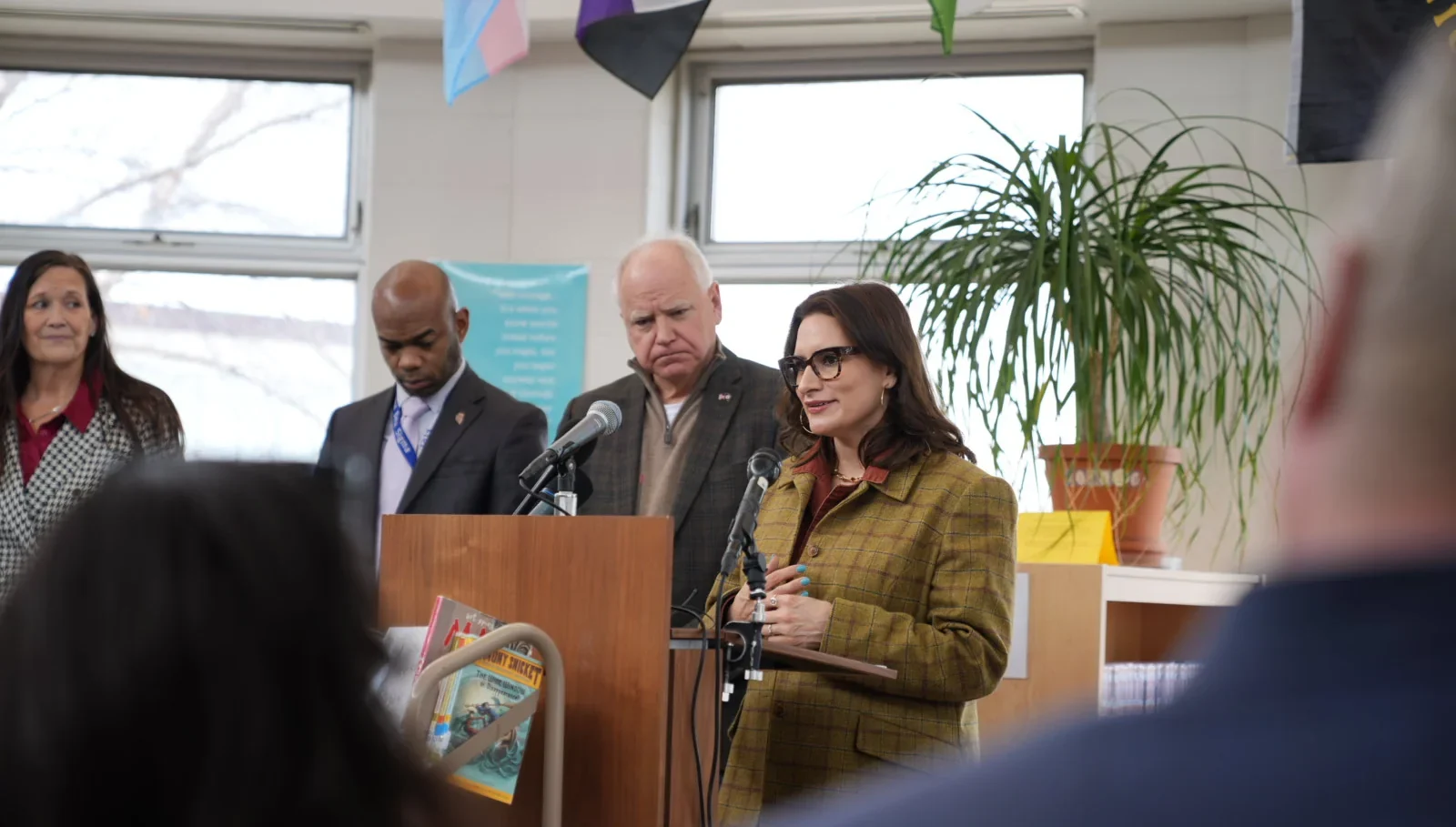




Minnesota Lt. Gov. Peggy Flanagan won the state’s open U.S. Senate seat on Tuesday, defeating Republican Michele Tafoya in a race The Associated Press called late on election night. The victory makes Flanagan the first Native American woman ever elected to the U.S. Senate.
Flanagan, the Democratic nominee, had 1,520,299 votes to 1,232,683 for Tafoya in AP results checked on Wednesday, a margin of 287,616 votes, or about 10 percentage points. All 4,105 precincts in Minnesota had reported, and the AP estimated that 98.8 percent of the total vote had been counted. The figures are still unofficial, and small shifts are possible before the state certifies the result, but the outcome is not in doubt.
A first for the Senate
Flanagan is a citizen of the White Earth Band of Ojibwe in northern Minnesota. Native American men have served in the Senate before, but no Native American woman had ever won a seat in the chamber until now. The AP, in its reporting on the night’s historic firsts, described her as the first Native American female U.S. senator.
It is not her first barrier broken. When she took office as lieutenant governor in 2019, Flanagan became the first woman of color elected to statewide office in Minnesota and the first Native American elected to a statewide executive office in the state. She now carries that record to Washington, where she will join a Senate that has seated Native American senators before but never a Native American woman.
Her first is separate from another race still being counted. In Alaska, Democrat Mary Peltola, who is Yup’ik, could become the first Alaska Native U.S. senator if she unseats Republican Sen. Dan Sullivan. The AP reported that ballots in that race were still being tabulated, and it had not been called.
How Flanagan won
The seat came open because Sen. Tina Smith, a Democrat who has held it since 2018, chose not to seek reelection. Flanagan won the Democratic nomination in the August primary, defeating U.S. Rep. Angie Craig with about 59 percent of the vote. She ran as a progressive, supporting Medicare for All, universal child care and a $17 federal minimum wage, and she campaigned against the Trump administration’s immigration crackdown in Minnesota.
She also had to run through heavy scrutiny of a sprawling public-benefits fraud scandal in the state, a story that drew national attention to the race. Republicans argued that Flanagan, as the state’s second-highest official in Gov. Tim Walz’s administration, should be held accountable for fraud that happened on its watch. Flanagan acknowledged that more should have been done to stop the abuse of taxpayer funds, while saying she was not responsible for overseeing the agencies at the center of the fraud investigations. The scandal also contributed to Walz’s decision to give up his bid for a third term as governor. Minnesota voters, in the end, did not hold it against her.
The two candidates
Flanagan, a former member of the Minnesota House of Representatives, has served as lieutenant governor since January 2019. She ran on the same ticket as Walz twice, winning office in 2018 and reelection in 2022.
Tafoya, 61, was a political newcomer. She was best known to national audiences as a sideline reporter for NBC’s “Sunday Night Football” before becoming a conservative political commentator. She ran with President Donald Trump’s endorsement, but she also worked to show some distance from her party, saying she was willing to break with Republicans when she thought it necessary, and she took a more moderate position on abortion than many in her party, supporting access through 12 weeks of pregnancy. It was her first run for public office.
On election night, Tafoya conceded and called Flanagan to congratulate her. “The voters spoke, so we’re going to respect the voters,” she told supporters, according to Front Office Sports.
What the result means for the Senate
Minnesota’s seat was already in Democratic hands, so Flanagan’s win is a hold rather than a flip. Holds mattered this year. Democrats needed a net gain of four seats to take control of the 100-seat Senate, and losing a seat in a state like Minnesota would have raised the number of Republican seats they had to capture elsewhere. Instead, the seat stays Democratic on a night when Democrats won control of both the House and the Senate. The result also extends a long pattern: Minnesota has not elected a Republican to the U.S. Senate since 2002.
What comes next
Flanagan will succeed Smith when the new Senate terms begin. Under the Constitution, the terms of senators and representatives start on January 3, so she is set to take her seat on January 3, 2027, once Minnesota certifies the results. She will serve a six-year term, and she will arrive in Washington as both a new senator and a history maker: the first Native American woman ever elected to sit in the chamber.
Vote figures in this story are from Associated Press results checked at 12:45 UTC on November 4, 2026. Totals may change slightly as remaining ballots are counted and before state certification.