


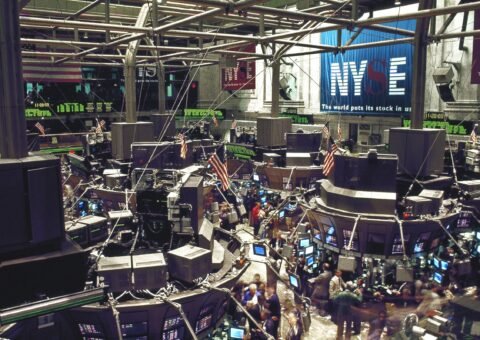


Wall Street delivered its verdict on the midterm elections on Wednesday, and it was a roar. The Dow Jones Industrial Average surged 1,569 points, or 3 percent, its biggest gain on the day after a midterm election since 1982, according to CFRA Research data cited by CNN, as investors priced in a Democratic Congress, a likely divided government and a possible wind-down of the war with Iran.
The rally was broad. The S&P 500 rose 1.58 percent, its second-largest post-midterm gain since 1982, behind only 2018, and the Nasdaq Composite added 1.44 percent. It was the Dow’s best single day since April 2025 and the fifth-largest point gain in its history.
The closing numbers
| Index | Close | Change |
|---|---|---|
| Dow Jones Industrial Average | 53,356.12 | +1,569.40 (+3.03%) |
| S&P 500 | 7,688.62 | +119.70 (+1.58%) |
| Nasdaq Composite | 25,736.51 | +364.50 (+1.44%) |
| Brent crude oil | Below $95 a barrel | Down almost 9% |
| VIX volatility index | – | Down about 20% |
Why markets ripped higher
Traders pointed to clarity first. The scale of the Democratic win, mapped in our analysis of which states flipped, removed the uncertainty of a contested or split result, and CNBC reported that President Donald Trump’s acceptance of the outcome further calmed nerves. A Congress held by the opposing party also limits how much of the president’s agenda can pass, an arrangement markets have historically treated as stability.
The biggest single move was in oil. Brent crude fell almost 9 percent to below $95 a barrel, and US crude slid to $88.12, as traders bet that a Democratic Congress makes renewed strikes on Iran less likely and a settlement more likely. Falling oil, falling bond yields and a 20 percent drop in the VIX fear gauge all pointed the same way: risk on.
The one corner that fell
Not everything rose. The PHLX Semiconductor Index dropped 3.6 percent as the backlash against AI data-center spending, which had been building before the election, pulled chip stocks the other way. The split captured the day’s real debate on Wall Street: relief about politics, and an argument about artificial intelligence valuations that the election did nothing to settle.
The historical pattern
Post-midterm rallies are a well-worn pattern. Market research cited in Wednesday’s coverage notes that the S&P 500 has been higher twelve months after every midterm election since 1950, with a median gain of about 14.5 percent, and that the fourth quarter of midterm years has historically been the strongest stretch of the presidential cycle. Wednesday’s session was an unusually loud start to that window: a 44-year record for the Dow, set before the new Congress has even been sworn in.
Sources: CNN and CFRA Research; Associated Press closing data; CNBC market reporting, November 4, 2026. This article is market news coverage, not investment advice.