


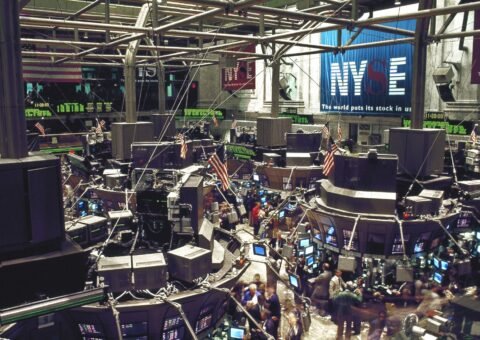



Wall Street roared back on Monday. The Dow Jones Industrial Average jumped 1,104.02 points, or 2.15 percent, to close at 52,389.75, as falling oil prices and a strong rebound in chip stocks helped the stock market today recover most of what it lost in last week’s selloff.
The S&P 500 rose 173.08 points, or 2.35 percent, to 7,549.94, its best single day since April. The Nasdaq composite climbed 673.71 points, or 2.74 percent, to 25,253.14. The rally was broad: all 11 sectors of the S&P 500 closed higher, the first time they have all risen together since May, according to The Wall Street Journal.
Cheaper oil took the pressure off
The biggest push came from energy markets. Brent crude, the global benchmark for oil, fell 5.8 percent on Monday to settle at $92.57 a barrel, its lowest level since August, Reuters reported. Brent had traded above $112 a barrel in early November, so the slide is a sharp change in a short time.
The drop followed comments from President Donald Trump, who told CNN in a weekend interview that further U.S. strikes on Iran were highly unlikely as long as negotiations over Tehran’s nuclear program and the reopening of the Strait of Hormuz kept making progress. Oil traders had spent weeks pricing in the risk of a wider conflict and tighter supply. When that risk eased, the price fell.
Cheaper oil matters for stocks because fuel and energy costs feed into almost everything else, from shipping to airfares. A lower oil price eases inflation pressure and leaves households with more room to spend.
Chip stocks led the way back
Technology shares did the heavy lifting on the indexes. The Philadelphia Semiconductor Index, which tracks the biggest chipmakers, jumped 6.85 percent. AMD surged about 13 percent after Oppenheimer upgraded the stock and Google Cloud picked AMD server chips for a new AI system, the Motley Fool reported. Broadcom gained about 8.8 percent.
The bounce followed last week’s AI selloff, when the Dow lost 1,833 points in a single session as investors questioned how fast data center spending would pay off. Monday’s buying suggests many investors decided those shares had fallen far enough.
One giant name missed the rally. Nvidia fell 4.27 percent to $178.67 after its board opened an independent inquiry involving chief executive Jensen Huang. The drop made Nvidia the exception on a day when nearly every other major chip stock rose.
Washington added to the calmer mood. The Senate passed the funding package on Monday night in a bid to end the government shutdown, and a House vote is expected on Wednesday. The bill still needs to clear the House and reach the president’s desk before the shutdown is over.

Now the focus shifts to inflation
The next test arrives this morning. The Bureau of Labor Statistics releases the October Consumer Price Index, the government’s main inflation report, at 8:30 a.m. Eastern time.
Economists surveyed by Dow Jones expect consumer prices to have risen 0.3 percent in October, with core prices, which strip out food and energy, up 0.2 percent. Both would be slower than September, when headline prices rose 0.6 percent and core prices rose 0.3 percent. A cooler reading would support the idea that the recent oil slide is starting to pull inflation down.
This report has one unusual gap. It will carry no official 12-month inflation rate, because the bureau could not collect prices in October 2025 during last year’s government shutdown, so there is no year-ago figure to compare against. September’s 3.7 percent annual rate is the last official yearly number until the next report.
The stakes are high because this is the last CPI report before the Federal Reserve meets on December 8 and 9. Traders will read the monthly figures closely for clues about whether the Fed’s next move on interest rates points up, down or nowhere. Follow the rest of the day’s market and economy news in our Business coverage.